By the SunSpec team, with 25+ years of combined experience in custom outdoor roofing across the Central Coast, Newcastle and Sydney.
This is the question we get asked more than any other. An insulated roof is a fixed, fully watertight roof built from thermally efficient panels, designed to hold a steady, comfortable temperature underneath. A louvred roof is an adjustable system of aluminium blades that you tilt open or closed to control sun, shade and airflow on demand. Both are excellent. They are simply built to solve different problems, and the right answer depends far more on how you use your outdoor area than on which product sounds better on paper. SunSpec designs, manufactures and installs both across the Central Coast, Newcastle and Sydney.
<aside>
Straight answer, before the detail
- Pick insulated if you want certainty: full weather protection, cooler summers, warmer winters, quieter rain.
- Pick louvred if you want control: sun in winter, shade in summer, airflow whenever you want it.
- Rain: insulated roofs are fully watertight. Louvred roofs are water-proofed, and some water can drip through.
- Heat: insulated panels block radiant heat. Louvres manage it by shading and venting instead.
- Moving parts: louvred systems are motorised. Insulated roofs have none.
- Both carry a 10-year structural warranty, with 3 years on motors and electronics.
The Difference in One Line
An insulated roof decides the weather for you. A louvred roof lets you decide.
That is the whole comparison in a sentence, and it is worth holding onto as you read the rest, because most people already know which of those two they want.
How Each System Actually Works
Louvred Roofs: Adjustable Aluminium Blades
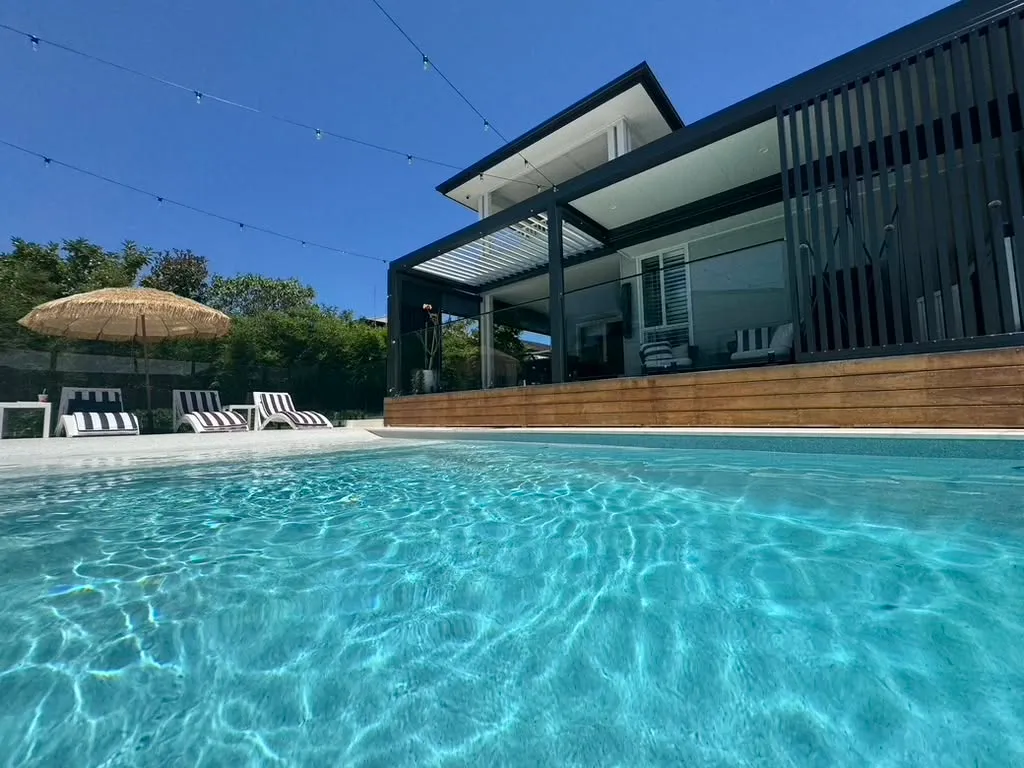
A louvred roof is made up of marine grade aluminium blades set into a powder coated frame. The blades tilt up to 160 degrees, driven by Linak motors from Denmark and Teleco electronics from Italy, so you can move from fully open to fully closed at the press of a button. Open them on a cool winter morning to let sun onto the paving. Close them at two in the afternoon in January when the glare gets serious. Crack them slightly to vent heat and smoke while the barbecue is going.
One thing to be clear about, because it matters: a louvred roof is water-proofed rather than fully watertight. Closed blades shed most rain, but some water can still find its way through, and the system is not built to be relied on through a severe storm. It is designed for control in mild to moderate conditions, and it is very good at that job.
Insulated Roofs: A Solid Thermal Panel
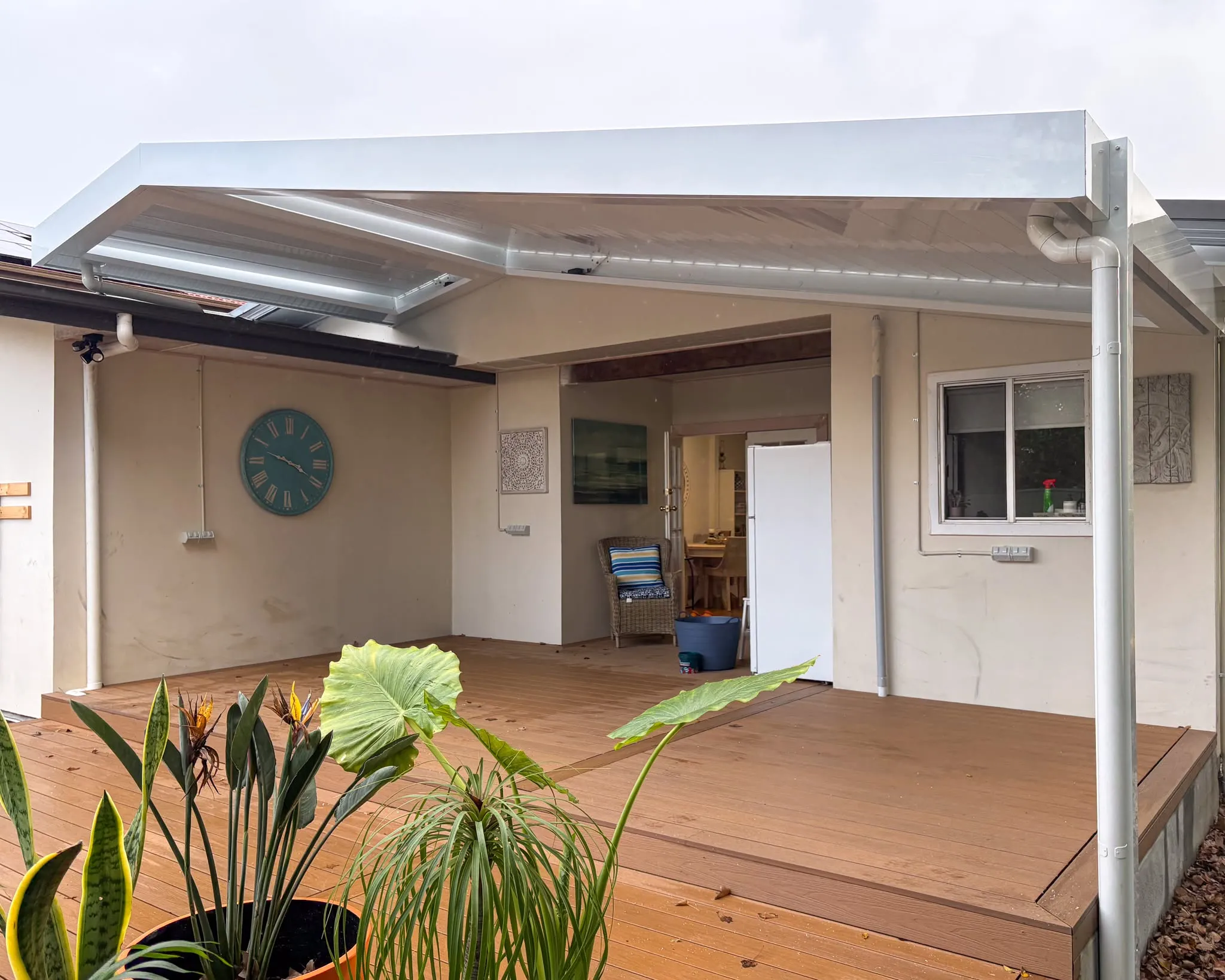
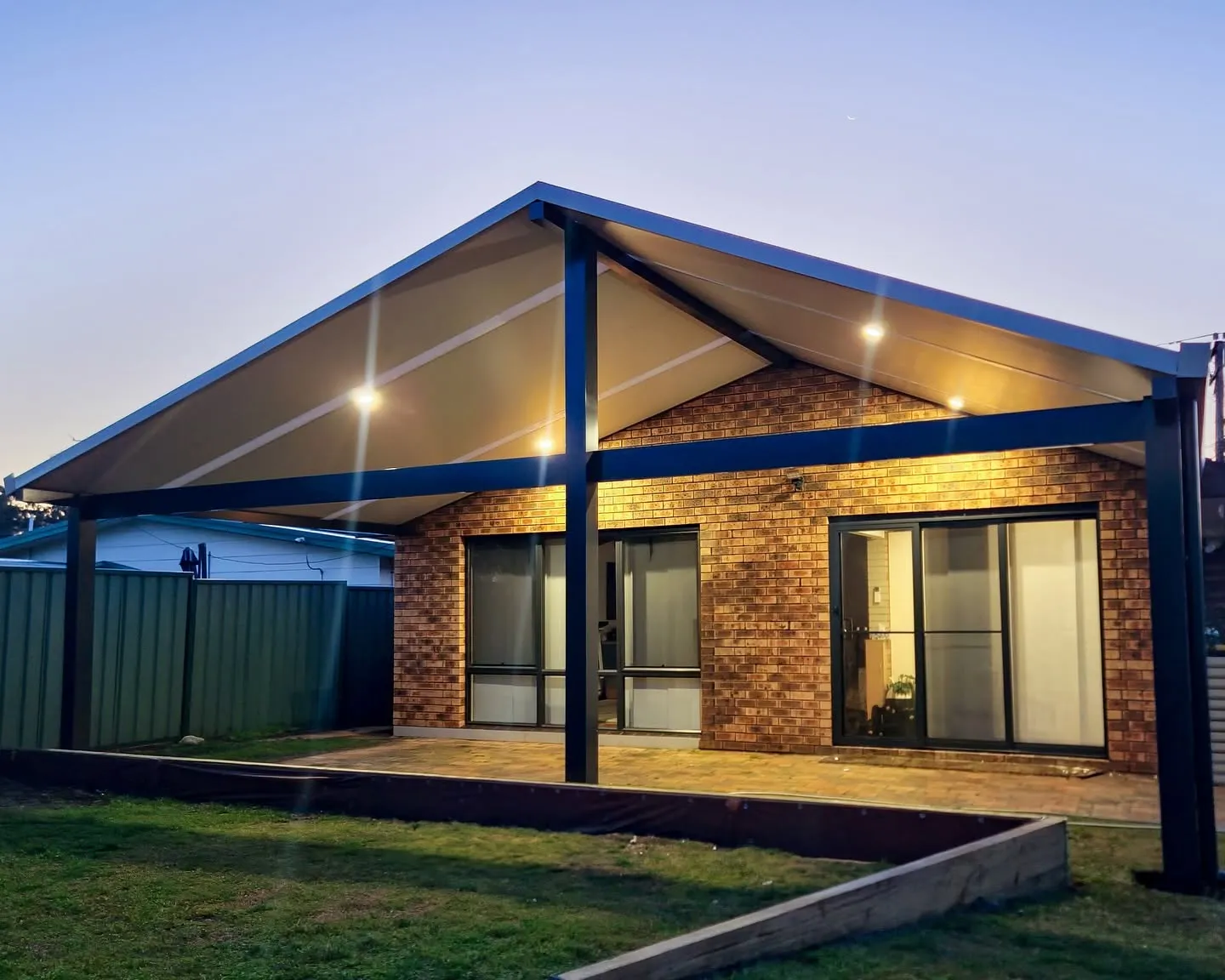
An insulated roof uses panels with a high thermal resistance core, finished in Colorbond steel and tied into integrated stormwater drainage. There is nothing to adjust and nothing to operate. The panel blocks radiant heat before it reaches the space below, holds warmth in through the cooler months, and keeps the area completely dry no matter what the sky is doing.
The insulation also does something people rarely think about until they experience it: it softens the sound of rain. Under single skin sheeting a decent shower can end a conversation. Under an insulated panel it becomes background noise. We have also compared insulated against non-insulated patio roofs if that is the choice in front of you.
Side by Side
| What you care about | Insulated roof | Louvred roof |
|---|---|---|
| Sun control | Fixed shade, all day, every day | Fully adjustable, sun or shade on demand |
| Rain | Fully watertight with stormwater drainage | Water-proofed, some drip-through possible |
| Summer heat underneath | Blocked at the panel by the thermal core | Managed by shading and venting hot air out |
| Winter warmth | Holds warmth in the space | Open the blades and let the sun do the work |
| Airflow | Around the edges only | Adjustable through the roof itself |
| Rain noise | Noticeably reduced | Standard for an aluminium system |
| Moving parts | None | Motors and electronics |
| Warranty | 10-year structural | 10-year structural, 3 years on motors |
Where the Difference Really Shows Up
Specifications only take you so far. Here is how the two feel to live with.
When It Rains
This is the clearest split. Under an insulated roof, rain is a non-event. Dinner continues, the cushions stay out, nobody moves. Under a louvred roof with the blades closed you will stay comfortable through a passing shower, but a heavy downpour is a different matter and you may get some drips. If your outdoor area holds a dining table you use in all weather, that difference will decide it for you.
In the Middle of Summer
Both work, in different ways. The insulated panel stops heat from ever reaching the space. The louvred roof shades the space and, crucially, lets the hot air escape upwards rather than pooling underneath. In a spot with good cross breeze, an open louvre system can feel genuinely cooler than a fixed roof. In a still, enclosed courtyard, the insulated panel usually wins.
Through Winter
The louvred roof has a trick here that a fixed roof cannot match. Open the blades on a clear July morning and the space fills with sun, which is exactly what you want when it is fifteen degrees. A fixed roof of any kind keeps that sun out year round. Against that, the insulated roof holds warmth better once you add a heater and close the space in with screens.
Over the Years
An insulated roof has nothing to service. A louvred roof has motors and electronics, which are covered for three years and are built by Linak and Teleco specifically because they need to last, but they are still moving parts. Neither is high maintenance. If the idea of anything mechanical outdoors bothers you, that is a fair reason to lean insulated.
A Louvred Roof Is Probably Right for You If
- You want winter sun on the space and summer shade over the same spot
- Airflow matters, whether for a barbecue, a hot courtyard or simply comfort
- The outdoor area is used mostly in fair weather rather than through storms
- You like the idea of changing the space to suit the day
- The look of a modern adjustable system appeals to you
An Insulated Roof Is Probably Right for You If
- You want a genuine second living room outdoors, used regardless of weather
- The patio bakes in summer or sits against a hot north or west facing wall
- Rain noise has been a problem, or the space sits under a flight path of downpours
- Outdoor furniture, rugs and soft furnishings need to stay out permanently
- You would rather set and forget than adjust anything
Why Plenty of Homes End Up With Both
This is the part most comparison articles leave out. These systems are not mutually exclusive, and combining them across one roofline is one of the most popular briefs we design.
The usual configuration is an insulated section over the dining and cooking zones, where certainty matters most, with an adjustable louvred section over the lounging area, where flexibility is the point. Planned as a single structure with matching frames and finishes, it reads as one deliberate design rather than two separate additions. You get the dry, quiet, temperature stable zone where you need it, and the sun-on-demand zone where you want it. Our alfresco design guide covers how to plan those zones before you choose a roof.
What to Expect on Price and Timing
A louvred roof generally sits at a higher price point than an insulated roof of the same footprint, because of the motors, electronics and engineering behind the moving blades. That said, size, span, site access and finishes move the number far more than the product type alone, so comparing the two in the abstract is not especially useful. Every SunSpec quote follows a free on-site measure with $0 call-out fees, so you can see real numbers for both options on your actual space before deciding.
On timing, allow 8 to 12 weeks from design through to installation for either system, sometimes faster. Manufacturing and powder coating accounts for roughly 4 to 8 weeks of that, and louvred installs are usually 1 to 2 days on site depending on size and complexity.
Frequently Asked Questions
Can a louvred roof keep rain out completely?
No, and we would rather be straight about that. Closed louvres shed the bulk of the rain, but the system is water-proofed rather than fully watertight, so some water can drip through. If a completely dry space is essential, an insulated or standard patio roof is the right call.
Which one is better for a west facing patio?
Both handle it, but for different reasons. An insulated roof stops the heat from that harsh late sun before it enters the space, which is the simpler fix. A louvred roof lets you angle the blades against the low western sun while keeping airflow, which some people prefer. If the wall behind is also overheating the house, insulated has the edge.
Can I convert an existing louvred roof to insulated, or the other way around?
The two systems use different structural approaches, so a straight swap is rarely a simple exchange of the roof surface. In some cases the existing frame can be reworked. We assess this properly at the on-site measure rather than guessing.
Do louvred roofs need power connected?
Yes, motorised louvre systems need a power supply for the motors and controls. This is factored into the design and quote, and we work through the practical details, including where the controls sit, before installation.
Which one adds more value to a home?
Both present well, and a finished, weather-proof outdoor room tends to be the bigger drawcard at an open home than the specific technology overhead. Louvred systems carry a strong visual wow factor, while insulated roofs read as a complete, usable extra living space. Choose the one you will actually use, because that is what makes the space feel loved.
Are both suitable for coastal homes?
Yes. For properties near the water we specify marine grade aluminium and premium powder coating on either system, which is the right call anywhere salt air is a factor.
Not Sure Which Way to Go? Let’s Look at the Space
Most people arrive at this decision with a rough preference and one nagging doubt. Ten minutes standing in your backyard usually settles it, because the orientation, the wind, the wall behind and the way you actually use the area make the answer obvious. Book a free on-site measure and we will talk through both options honestly, including the one we would not recommend for your space and why.
Call 1300 584 750 or request a free quote online to compare both systems on your own space. Free on-site measure with $0 call-out fees. Licence 317420C · Linak and Teleco motorised components · 10-year structural warranty · 3-year warranty on motors and electronics.
SunSpec is a licensed outdoor structure specialist (Licence 317420C) with more than 25 years of combined experience, custom designing, manufacturing and installing louvred roofs, insulated roofs, patio roofs and privacy screens for homes across the Central Coast, Newcastle and Sydney. This article is general information only and does not account for the specific conditions of your property or your local council’s requirements. For advice specific to your site, book a free on-site measure.